
Category: 2016-2020
-
Why Jane Eyre should be Everyone’s Favourite Literary Heroine
Jane Eyre was published in 1847 by Charlotte Brontë, whose own tragic life influenced her writing majorly. Brontë created Jane’s character to be independent whilst also being vulnerable; calm whilst furiously passionate; honest and incredibly brave. Brontë rejected the convention of the ‘beautiful’ heroine as she wanted a more relatable female protagonist. It doesn’t only…
-
Why do Regional Accents Disappear when we Sing?
It’s a pretty common occurrence: You’ve heard a couple of songs by an artist and you stumble across an interview or a RapGenius video where said artist is breaking down their song lyrics and to your surprise, they have a British accent. You scroll down to the comments and find other fans who are just…
-

Should we Believe all the Headlines we Read?
ISIS – the self-proclaimed ‘Islamic State of Iraq and Syria’ — dates all the way back to 2006. However, only in the past few years have they been the focus of headlines for their barbaric and brutal actions towards innocent civilians and their radicalisation and indoctrination of citizens of the West. It is assumed that…
-

Getting to Know your Lecturer: Martin Edwardes
Martin is a beloved lecturer at KCL. His main line of research is concerned with the origins of language. He says he is, “looking at the role of self in language: where it comes from, how selfhood defines our relationship with language, and how our language defines selfhood.” His first book, published in 2010, was The…
-

The Language of Loss
My friend told me about a conversation she had with a teacher who was ranting about the intensity and rigour of the teacher training programme when she was a trainee. She said the teacher said something along the lines of: “The course was so challenging and time-consuming to a point that she lost her husband.”…
-

Language and Popular Culture Lab: Seeing Things from a Different Perspective
On the 14th of November 2018, both BA and MA students from King’s College had the chance to attend the first meeting of “Language and Popular Culture Lab”, ran by Professor Ben Rampton and Dr Lavanya Sankaran. As the first Lab meeting of the year, Ben and Lavanya gave the students general information, presenting how…
-
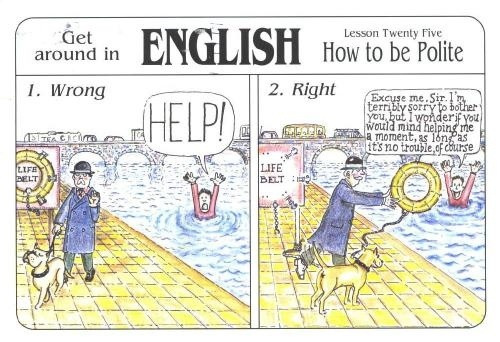
Personal Pronouns and Politeness
Language is a system of coding made up of sounds, building up to create morphemes, and then building up to make words. Studying linguistics means that we often focus on language and its structural components rather than looking at the wider interplay of language and the society it is based in. However, some fields of…
-
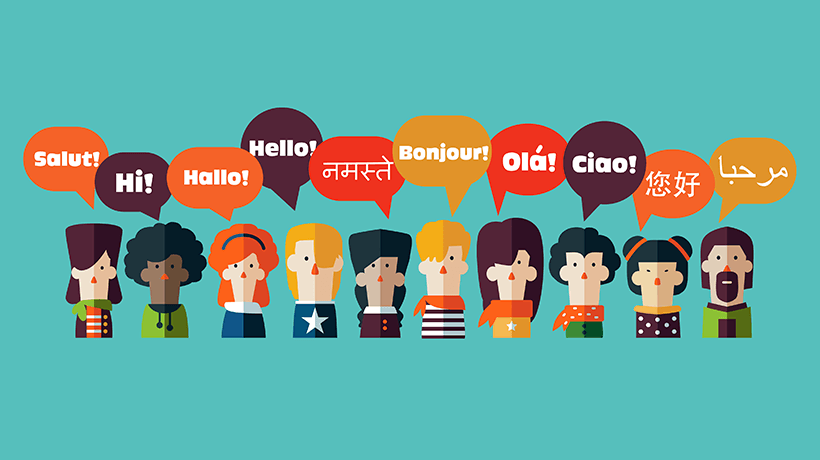
The First Step in Learning a Language – and how to Finally get Started
If you’re anything like me, you’ve been saying that you want to learn a language for the past gazillion years. Learning a language, or at least starting to, might have been one of your resolutions for the year. But lo and behold, 2018 is almost over, and you haven’t actually started learning the language you…
-
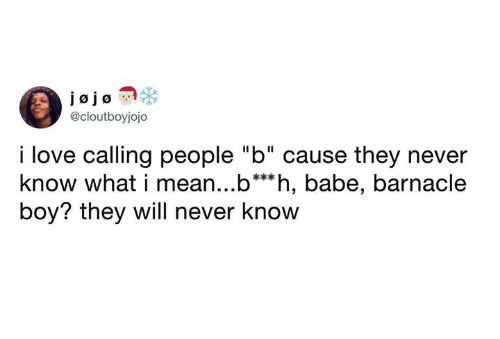
Babe or Bro – What Does ‘B’ Really Mean?
The growing rate of slang and abbreviations in online messaging has dramatically impacted language use in everyday conversation. Internet slang has made its way into real-world speech, and now, dictionaries! Words such as ‘FIL’ (father in law) and ‘FOMO’ (fear of missing out) are featured in the Oxford Online Dictionary. Sometimes, however, slang is lost…
-
Chinese – A Tenseless Language?
“‘Love’, this English word: like other English words it has tense. ‘Loved’ or ‘will love’ or ‘have loved’. All these specific tenses mean love is time-limited. Not infinite. It only exist in particular period of time. In Chinese, love is ‘爱’ (ai). It has no tense. No past and future. Love in Chinese means a…