
– by Ishita Jhunjhunwala
Lecture Capture, a part of Echo360’s drive towards active learning and access to education, has been a topic of much debate on university campuses for the past couple of years. The recurrence of the topic amongst students and staff of the KCL Social Science and Public Policy department led to a Food for Thought discussion based on the topic.
Staff and students associated with the Centre for Language Discourse and Communication, a member of the IT department, and the Inclusion Learning Officer from KCL learning were present for the discussion on the 2nd of March, 12.30pm, in the Waterloo Bridge Wing of the Waterloo Campus.
There has been a general outcry from most students at the lack of recording of lectures, while most other departments at King’s have already implemented it. Whether it is to catch up on a missed class due to health reasons, or because it was difficult to follow the lecture, the response has been mainly unanimous; there is a growing need for lecture capture for students today. After all, what is the point of the advancement of technology if we’re not benefiting from it?
However, the faculty had its own reasoning. The biggest factor behind the decision of foregoing lecture capture so far was that there was a general feeling of distrust towards higher authority, amongst the staff of the SSPP department. According to them, lecture capture “was imposed” and “lecturers feel they were not consulted”. This seemed to be a repeated occurrence of the KCL authority towards its various departments. Therefore, they feel it is time to take a stance.
Guy Cook neatly outlined his objections in three points: firstly, he felt that the relation between student and teacher was very important, and it went against his “pedagogical principle”. Secondly, the technology was very two-dimensional and he did not want it to become a substitute for attending classes, as it would fail to encapsulate the intimate environment of the classroom. Lastly, his opposition was of a political nature. Apart from being imposed, lecture capture made them vulnerable to being monitored, and it would be an intrusion of the privacy of the lecture.
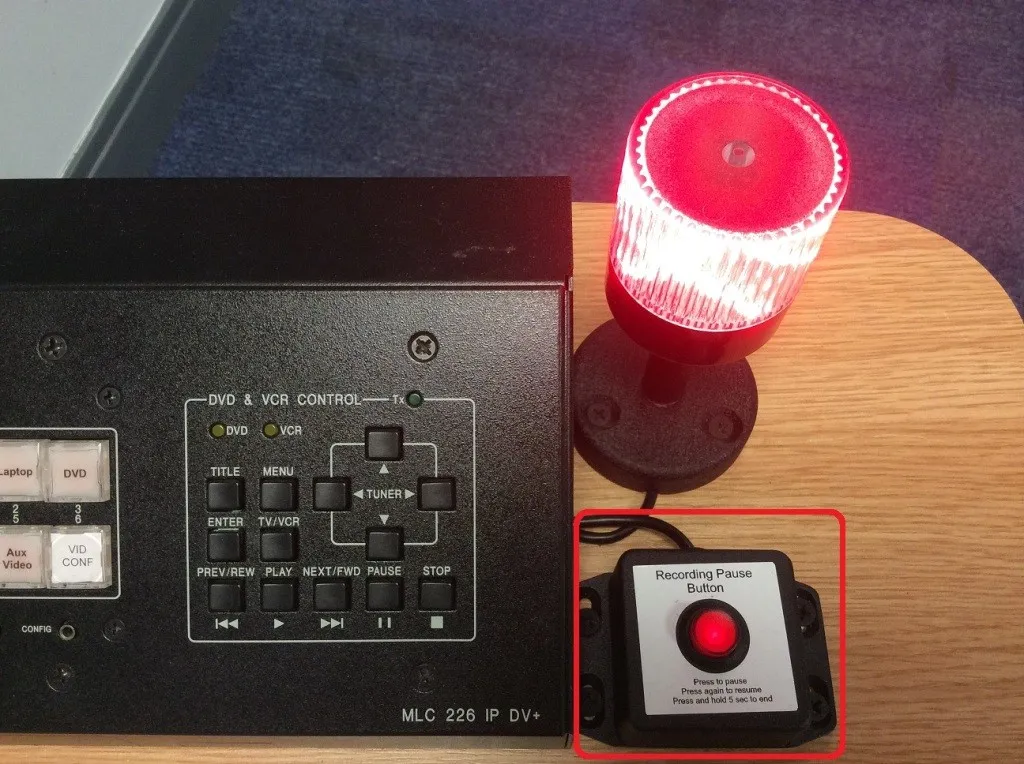
In fact, Martin Edwardes piped in to vouch for the inaccessibility of using lecture capture. When he was told he would need to download an app on his phone to make use of this technology, he stated, “No one, not even the pope, is getting anything on my phone”. Little did he realise the red light meant lecture capture was turned on and his lectures were all up online.
Another point to be noted, that came to light, was how some students might feel ‘camera conscious’. What was once a safe space for people to crack jokes, say things they might not believe in, etc, would not be the same if people knew they would be recorded saying things they don’t particularly want to be remembered for.
Alexandra Georgakopoulou, one of the staunch believers in lecture capture, seemed to put everyone’s mind at ease. She is one of the few who has already been using lecture capture in her classrooms, and has seen no significant change in attendance. For her, “transparency is key”, and there’s only so far you can go for privacy, in a world where everything is increasingly accessible thanks to the internet. Take note, if one of you learns how to pronounce her last name, you can go back to her being recorded while stating that anyone who can achieve the impossible feat automatically passes her module. In hindsight, it probably is not such a good idea to forget lecture capture is turned on, is it?
Benefits of lecture capture that were also discussed, were how it is inclusive and accessible for disabled students and it is the university’s way of providing them with the support they need, and that one day the professor could be creating content for their students from the comfort of their own home (or beach house, as Alexandra pointed out).
In conclusion, as Shona Rawlins from Y2 stated, lecture capture needs to be seen “as a supplement, not a substitute”. Hopefully, the discussion swayed the faculty to come to a consensus, and we will be a bit more guilt-free missing a lecture next semester, than we are now.
Leave a Reply