Why Write About Emojis?
I will admit, when I first came up with the idea to write about emojis in my debut published article, I was worried that it was too low-brow and that I should write about something more profound and niche instead. But, I had to stop myself when I realised that this hesitation was a product of prescriptivist bias! In the words of Brooklyn Nine-Nine’s Gina Linetti, “The English language cannot fully capture the depth and complexity of my thoughts, so I’m incorporating emoji into my speech to better express myself. Winky face.”
In all seriousness though, she had a point there. The birth and evolution of emoji is arguably the most interesting language development of the 21st century thus far, and they give major insight into the adaptability of language alongside technology. I would even argue that emojis have evolved into a standalone language and function as a virtual lingua franca. And I’m going to prove why.
The Generational Divide
The use of emoji differs greatly depending on one’s age group. This parallels traditional language tremendously: no generation speaks exactly like the ones that came before or after. With each generation come different variations in lexicon and how we utilise and adapt language. I’m not sure about you, but my 84 year old gran would never utter the words “It’s giving red flag vibes” and similarly would never text me with this: ‘👁👄👁’.
Now, picture this: I’m out with my friends, having a great time. My dad texts me to ask where I am, I reply, and he responds with ‘👍’. All of a sudden, my heart drops. I think that I’ve done something wrong, why is my own father sassing me?! Is he mad? Does he think I’m lying? … None of the above: he is a 43 year old man, therefore using it in a literal sense. If it were a fellow Gen-Zer who had sent me this, however, it would mean something much more sinister, rooted in deep, deep sarcasm. People born after 1997 typically only use this emoji in a literal sense when texting older generations—a subtle form of code-switching.
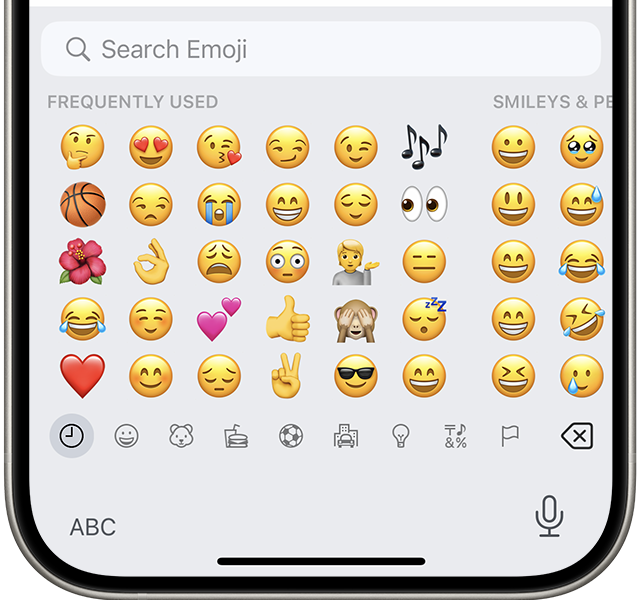
A great example of this generational divide is how differently each age group denotes laughter. In 2015, the classic laughing emoji (😂) was Oxford Dictionary’s “Word of the Year”. But Gen-Z decided less than 5 years later that it was too oversaturated and even “cringe”. So, we adapted and made a linguistic shift, leaving millennials and Gen-X in the dust where to this day, still use their beloved ‘😂’.
The laughing cat (😹) eventually became all the rage, most notably on TikTok in 2020, and more specifically on “alt” TikTok. This need to be alternative to the mainstream seemed to go too far and along with the laughing cat came the… chair (🪑)? I’m not kidding. People were using the chair emoji to represent laughter.
Some honourable mentions include ‘😭’ (I’m crying laughing) and ‘💀’ (I’m dying laughing/I’m dead).
This is very similar to the way in which young people utilise slang to draw a line between themselves and the generations that came before. New generations have always created, and will continue to, new ways of communicating that differentiate them from older generations and help establish a unique identity. This process is now seen online more and more frequently through the use of emojis. Linguist Penelope Eckert famously theorised that adolescents utilise slang to create distance from the mainstream adult culture and build solidarity through a differing use of language. Similarly, we use emojis that have different semantics and structures to the traditional norms (i.e., their intended purposes).
We have even found ways to express intonation and tone through emojis. Due to our lack of ability to use italics on platforms popular among Gen-Z such as TikTok and Instagram, we invented alternatives, such as placing a word or phrase between sparkles (✨like this✨) to emphasise it. This, again, became very popular during 2020, which goes to show how bored we were during lockdown, but this boredom clearly sparked creativity with language online. It is important to note, however, that this structure seems to have perjured over time, just like the poor face with tears of joy emoji. It is also now deemed as “too millennial”. The rise and fall of these emoji trends echo language patterns, as words and phrases gain popularity and then lose flavour over time.
Emoji as a Universal Language
Emojis serve as a lingua franca, with their universally recognizable images bridging language barriers. You could comment “😂😂😂” (“😹😹😹” if you’re down with the kids) on a TikTok posted by a non-English speaker and they would instantly know that it meant laughter.
Yet emoji use still differs depending on region and culture. For example, in East Asia, expressions such as “^_^” and “T_T” are used more frequently than they are in Western cultures, expressing local styles and paralleling the existence of dialects in traditional language.
This is important to note as emojis were founded in Japan by artist Shigetaka Kurita, and now they are used everywhere, highlighting their transformation from a localised tool to a globalised visual language.
Hermeneutical Injustice and the Importance of Representation
Along with how different cultures use emojis in unique ways, emojis themselves are becoming increasingly representative of diverse cultures and marginalised groups such as women, disabled people, and the LQBTQIA+ community. Mainly since 2015, there has been a plethora of adjustments to emojis in order to be more diverse and representative of their users. Apple has released five skin tone options, nonbinary people, a pregnant man, wheelchair users, guide dogs and many more.
TikTok creator @lifeafteranxiety made a video touching upon the fact that we still do not have emojis that represent afro-textured hair. She is campaigning to get emojis with these hairstyles on keyboards around the world. In her video, she also explains how having these emojis goes “way deeper than just having an emoji that looks like us”. She hopes it starts a conversation about texturism, educates people about black and mixed-race hairstyles and celebrates the diverse styles that are in the afro-hair community. This is just one of many examples of the importance of diversity and representation when it comes to any medium of language.
As we have gathered throughout this article, emojis parallel conventional language greatly and so, this is where the conversation about hermeneutical injustice comes in. This term refers to the lack of words to express certain experiences, especially experiences related to marginalised groups. For example, terms like ‘sexual harassment’ and ‘mansplaining’ are relatively recent, though the experiences they represent are not. Before these terms existed, women found it harder to explain or validate these issues, therefore there was inequality and injustice within the language. This is very similar to the language of emojis as before 2015, we did not have nearly as many that represent certain backgrounds and identities as we do today. Although it may seem insignificant to many and that it is “just an emoji”, ultimately representation does matter and especially in language. As @lifeafteranxiety mentioned, these changes hopefully spark conversations and relate to a much wider discourse than itself.
All in all, emojis are much more than digital decoration; they mirror language evolution and act as a window into cultural, generational, and social dynamics. Emoji has, in my opinion, become a language in its own right, capturing the fluidity and diversity of modern communication.
Leave a Reply