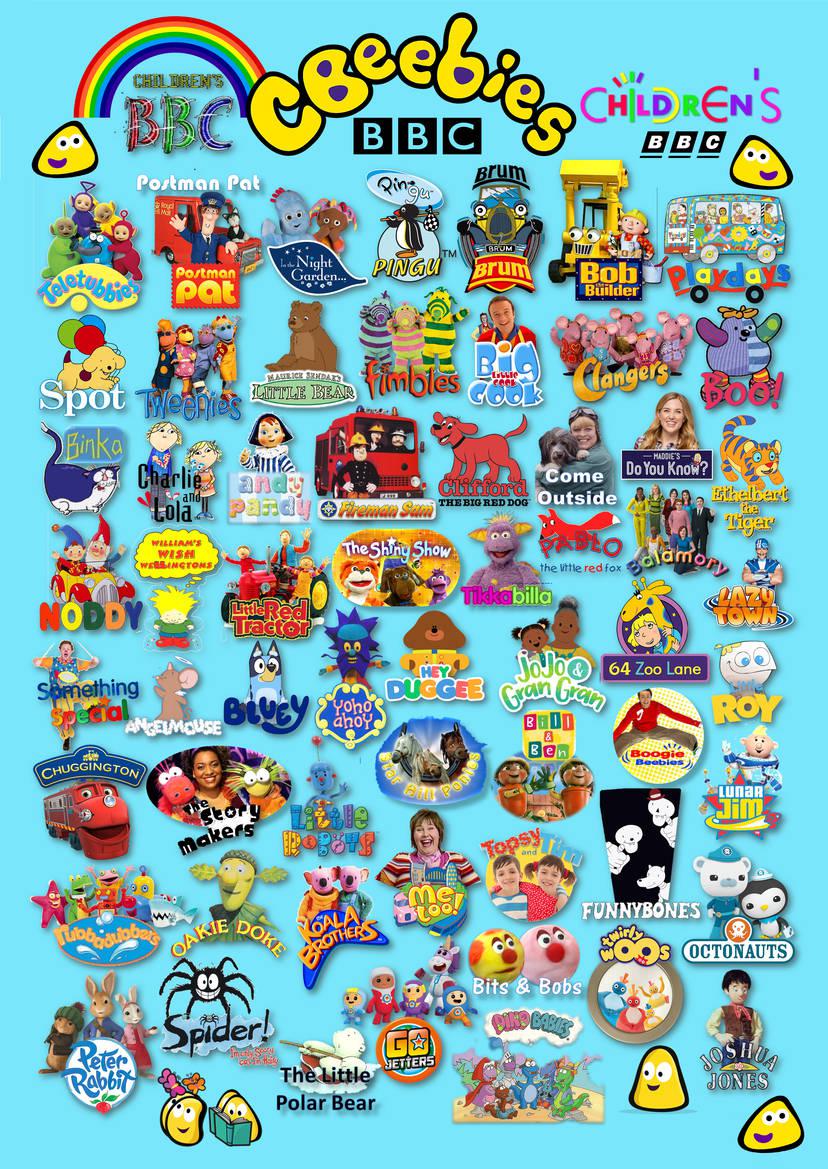
If we think back to our childhood days, many of us might think fondly of an era where we would sit for hours on end watching TV, with Cbeebies being at the heart of our generation’s entertainment. Providing us with endless shows to watch and absorb, I recall a near endless mix of vibrant and captivating characters. But taking that trip down memory lane as a linguistics student, a question arises: why did so many beloved characters have such strange names?
Consider the Teletubbies for example, where we saw an eclectic mix of names; Tinky Winky, Dipsy, Lala and Po. Or the bizarre names Makka Pakka and Iggle Piggle from In the Night Garden. Whilst this felt normal as children, giving thought to this idea now about characters we adored so much does spark some interest.
The main question that comes to mind is why were these names so unusual? There is the possibility that these names are simply enjoyable and funny for children. However, from a linguistic viewpoint, there could be more to it. These names often include sounds that are easier for children to produce, especially as they gradually learn to make more sounds as their speech develops. Short names with simple consonants and prominent vowel sounds, such as Lala and Po, therefore, may be easier to grasp during this developmental stage, not only to say, but to remember. The simple repetition of one syllable in Lala also constitutes a linguistic feature that likely poses less of a challenge for children to produce and retain.
Another thought-provoking aspect is the use of rhyming, seen in the names Tinky Winky, Makka Pakka and Iggle Piggle. Children are known to love rhymes, and this isn’t without reason. Rhyming encompasses a range of language benefits, including recognising and understanding common patterns of sounds and letters. As this contributes to an early phonological awareness, it becomes increasingly evident why children’s television shows featured names that may now seem odd. As TV is a form of entertainment that usually enters a child’s life before they begin school, the linguistic choices seen here are certainly a creative but also powerful way to form a strong basis for language development.
As well as rhyme and repetition, alliteration is another technique evident in the naming of classic children’s characters such as Peppa Pig or Mickey Mouse. Whilst these names aren’t in any way bizarre, the repetition of their initial consonant sounds is still interesting to analyse. Alliteration is considered to aid the development of sound awareness and letter recognition, which are crucial skills for when children learn to read. Though the use of alliteration for character names may seem subtle or common, the early introduction through TV definitely aids a child’s linguistic growth.
Reflecting on these strange character names we came across as children, it becomes clear that entertainment was not the sole purpose; language development seems to be of comparable significance, creating an educational core for the children’s entertainment industry. The longstanding impact of this doesn’t go unnoticed, as even today, as adults, it is the atypical, quirkier names that stick with us the most, consolidating the effectiveness of these choices. However, television has changed with time, and it’s worth pondering whether this linguistic focus is still alive within the newer generation’s entertainment. As someone unfamiliar with the programmes that children these days are interested in, I question whether this approach that seems so important retrospectively is still going strong today.
Our favourite childhood characters were therefore not only amusing pastimes created to entertain us, but also tools for language development. The whole concept may feel tainted by nostalgia, but it is certainly intriguing to ponder how much thought went into making our cherished programmes not only fun, but also educational during our earliest stages of learning and using language.
Leave a Reply