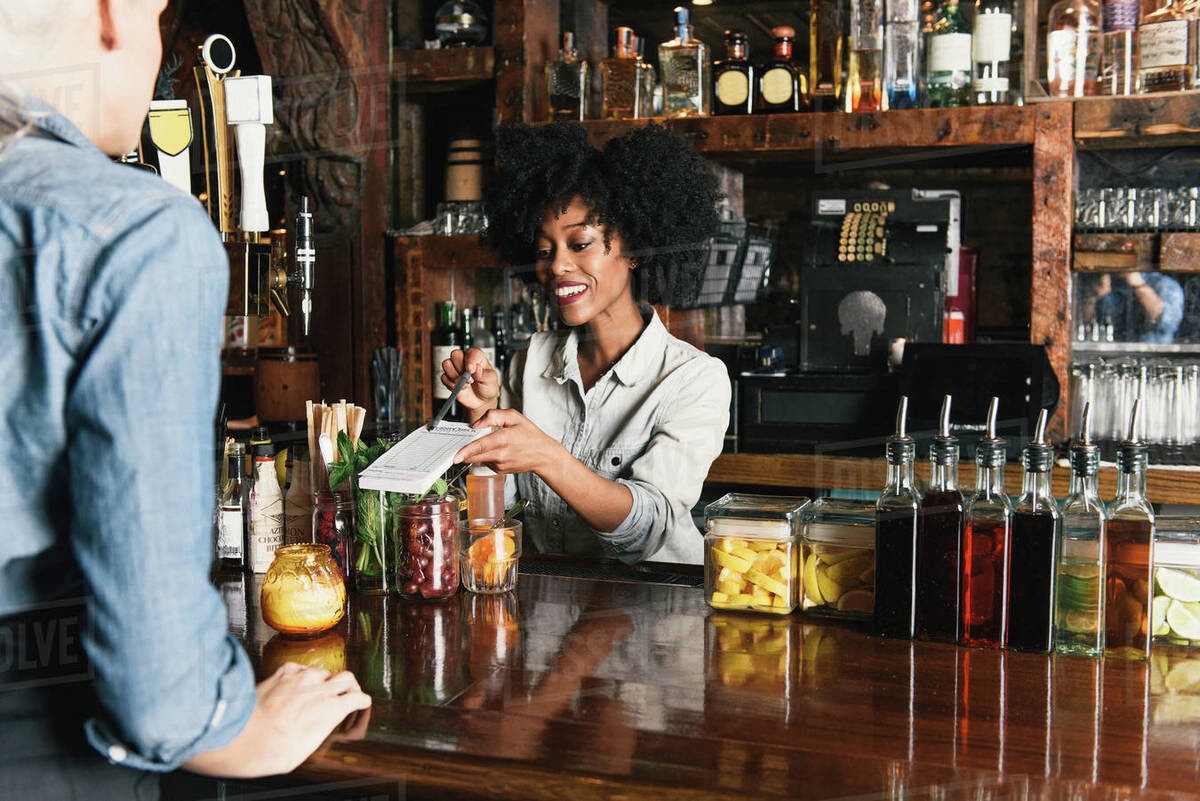
The title of this article might be confusing for you. You’re thinking, what could this article possibly be about? It is actually a piece relating my personal experiences working in a bar which I connect to the way language is used in the service industry.
The environment in which this particular encounter occurred is not as unusual as it might seem: a bar. Makes more sense now, doesn’t it? I am sure you are now able to interpret the short extract of the conversation in context and might even find it funny (I know I did when I heard a customer say it with a dead serious face).
For anyone who is not as experienced with bars and has managed to mostly stay away from them except for the “Come on, just one drink!” which never stays at just one. “Single or double?” was a question I asked the customer regarding the amount of spirit shots they want in their drink, just one or two. The customer, in this case a middle-aged guy, replied with “Single, how about you?” sneakily asking whether I myself was single. At first, I rolled my eyes but, to be honest, the longer I thought about it the more I saw it as a quite creative way of approaching someone.
Working at a bar one works with a variety of very different customers, ranging from funny, nice, strange or even annoying. The topics vary and range from the standard order, for example “I would like a double Gin and Tonic, please”, to complaints, for example “I asked for three ice cubes, not four” (that has literally happened to me, people can be such nit-pickers), from insults to compliments and even flirts.
Besides the typical jargon used in bars – including brands of alcohol, names of drinks, measurements, etc. – there is something about language used in bars which makes it special. I have to admit, the fact that alcohol makes chattier and less careful when crossing speech boundaries influences the way people speak heavily. For your entertainment, here are a few real-life examples taken from my almost six months working experience as a bartender which I think are worth mentioning.
I will not tell you about any orders at all because they are mostly the same and not really anything special (except for that one time when a customer asked me for a shot of gin with tap water, which is basically just watered down gin). Let’s move on to complaints then. There are all sorts of people accusing us bartenders of the craziest things and always find something to complain about. One much more experienced colleague of mine once told me, “The truth is, in reality, people are not complaining about their drinks or our service but about their own lives. They only need someone to blow off some steam.” Thinking of it from his perspective really helps me cope with ridiculous complaints but sometimes I’d love to just refuse to serve certain people (which we can do by the way). Besides the ice-cube-strategy I already told you about, there is another trick some people use in order to get new, full drinks even though they already took a big sip: the I-ordered-a-different-kind-of-spirit. People often order a double of a cheaper spirit alcohol with a mixer (Pepsi, lemonade, etc.) just to then, after paying for the cheaper drinks of course, take a sip big enough to get a good amount of alcohol and afterwards complain that they ordered a more expensive spirit.
Of course, when it comes to their word against mine the customer is always right, so I have to prepare the “correct” drink. But when telling them that they must pay for the price difference they start to argue with us to an extend when most of us just let them go and decide to not serve them again. They use strategic ways of formulating their orders that makes it nearly impossible to prove them wrong. Because of such people we have to use certain phrasing to make sure there is nothing to complain about, for example if a customer orders a “rum and coke”, I have to tell them that we only serve Pepsi and whether that’s fine with them. Anyone who works in the service industry knows that customers often feel superior and let us feel that they think they are. From treating us with disrespect to insulting, you will find it all. I am quite lucky that I work with really nice and understanding supervisors and managers who also don’t have time for a lot of fuss. Unlike many other bars we are allowed to, subtly clap back and tell customers off.
Let’s talk about something more positive. Besides the occasional annoying customer, there are many nice ones as well. Working at a bar you get a lot of compliments. From being told I look like an angel to trying to adopt me (yes, that couple was crazy but really sweet), I’ve heard it all. Sometimes people are even more than nice and try their luck with the bartenders. There are people trying really cheap moves, such as “What are you doing after this and how can I be part of it?”, and people with very creative attempts at flirting, such as the one I mentioned in the beginning. Another flirting attempt I quite enjoyed (even though, at first, it took me a little while to get) was the following scenario: I prepared the order for a customer and was about to charge the young gentleman when he said, “That’s not the number I was hoping for.” At first, I thought I did something wrong and checked the order and prices again. Realising I didn’t get it the customer continued, “I was hoping for a longer one, maybe yours?”
There are many scientific papers on the language used in the service industries and especially at bars, proving that the language used is more specific and different to everyday interactions. This article does not draw on scientific evidence but has the purpose of giving the readers a sense of what I experience working at a bar and how language and communication plays a vital part in my job.
Leave a Reply