“Bless thee, Bottom, bless thee. Thou art translated.”
In Shakespeare’s A Midsummer Night’s Dream, Bottom, the Weaver’s head, gets “transformed” into the head of an ass. Back in the Elizabethan Era, the word “translate” had a slightly different meaning in comparison to the modern day. To translate was to transform, to go through the process of metamorphosis—a physical change. In modern times, translating something usually refers to “re-writing” a text that is written in one language into another. In its more abstract form rather than a physical one, translation nowadays is still a metamorphosis.

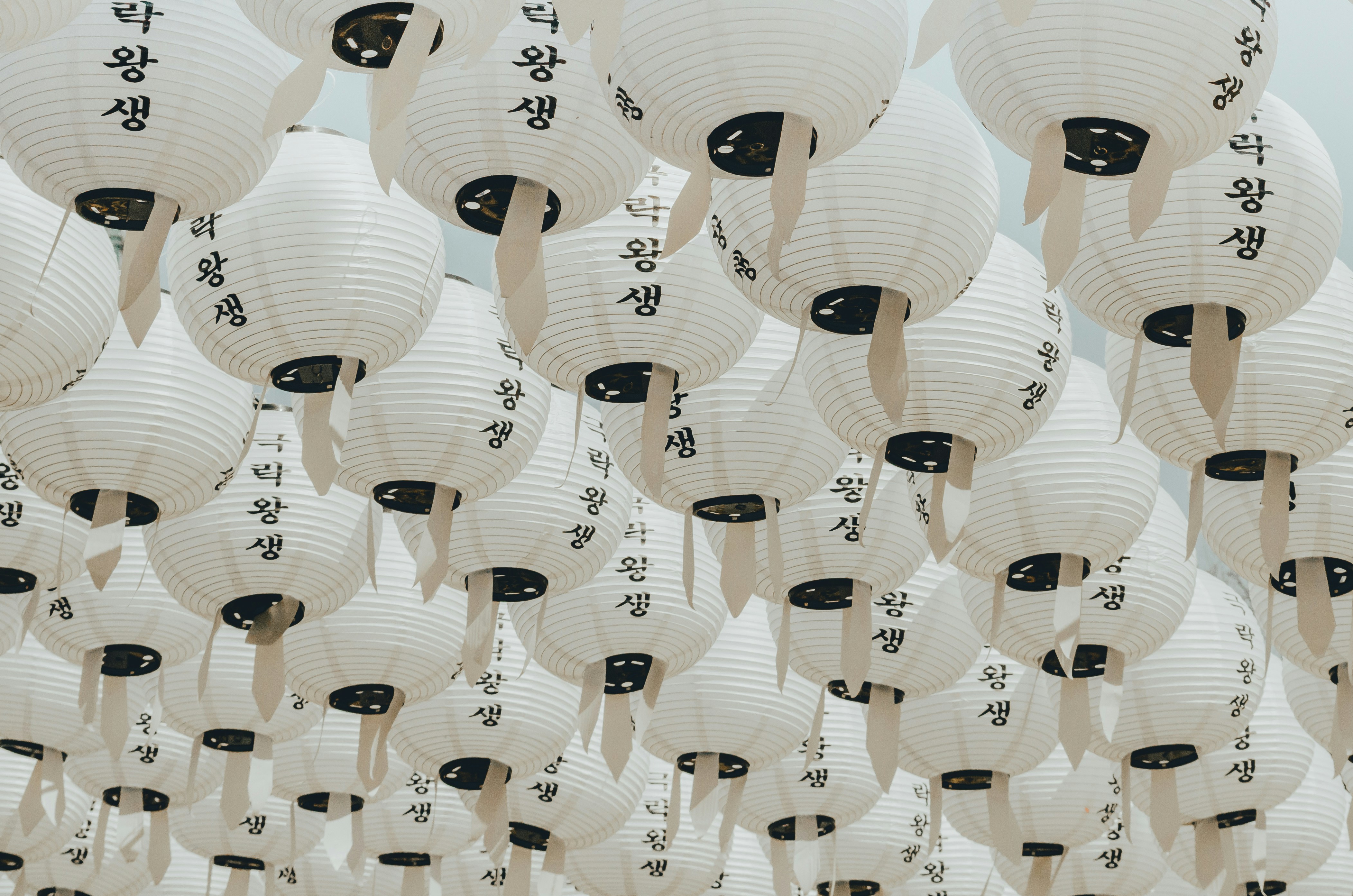
image 1: Metamorphosis
This provokes a set of new questions:
What does it mean, then, to translate something?
What makes a successful translation?
Should one translate every single word to stay faithful to the original work?
What if a word in one language doesn’t exist in another?
Is a perfect translation even possible?
The “perfect” translation of a text into another language needs a more precise definition. Growing up as a literature enthusiast in South Korea, it was a common misconception that Korean was too complex to be translated smoothly. Subsequently, this was also something I was conditioned to believe. However, for the past few years, writers, translators, and publishers have tried to prove them wrong, and finally, in 2024, it is evident that the Korean language has overcome the barriers of translation.
If you are interested in world literature and/or Korean culture, it is likely that you would have came across one of these names: Han Gang (漢江, 한강) and Han Kang (韓江, 한강). Han Gang refers to the river that cuts through the centre of Seoul, Han River, and the latter is the name of the Nobel Literature prize-winning novelist, Han Kang. These two names are written and pronounced the same in the Korean language and therefore cause confusion, even among native Korean speakers.
The unintentional play on homophones is quite interesting regarding how Korean names have been both romanised and westernised. Originating from ancient China, Korea—like many other countries in Asia—follows the Eastern name order where one’s surname precedes one’s given name (therefore the terms ‘first name’ and ‘last name’ did not make sense to 5-year-old me when I was learning English). However, when referring to their names outside of Asia, especially in the West, the majority of Koreans change the name order from Eastern to Western.
Some names, especially political figures in the East, are often written according to the Eastern standard (e.g., Kim Dae-Jung, Moon Jae-In, etc.). Only recently did Korean names begin to be written with family names first, which can be seen as part of the decolonisation of language use. The iconic name of the famous author, whether she intended to keep the Eastern name order or not, made her more unique than anyone else.

(Warning: this article may contain spoilers!)
Human Acts is the first book of Han Kang’s that I’ve ever read. It has always been a best-seller amongst Korean students, as many schools had this book on the “recommended list”. This novel is relatively shorter and therefore easier to read for secondary school students who don’t normally have much time to spend on reading alone.
Han Kang was born in Gwangju, located in one of the most southern provinces in South Korea, Jeolla-namdo (South Jeolla). The city, the capital of Korean democracy, embodies the struggles in modern Korean history. Between October 1979 and May 1980, the university students and the people of Gwangju protested against the military coup during the implementation of martial law. (See links: Gwangju Uprising 1 Gwangju Uprising 2)
“Why would you sing the national anthem for people who have been killed by soldiers? Why cover the coffin with the Taegukgi, as though it wasn’t the nation itself that had murdered them?”
(Human Acts, Han Kang, translated by Deborah Smith)
Human Acts is a strand of stories of what had taken place in Gwangju, 1980. Han Kang does a wonderful job of capturing the fear, the loss, and the devotion of those who sacrificed themselves for democracy.
Quite a few concerns have been expressed amongst Korean and international critics, debating whether the translation is done “well” or not. The novel contains significant parts of Korean history; therefore the struggles of the translation are fairly understandable. An article from The Guardian written after the release of Smith’s translation of Han Kang’s previous novel, The Vegetarian, raises concerns about Smith’s translation skills, noting that she had only studied Korean for three years before undertaking the work. Other narratives suggest that the mistranslations in her work occur much more frequently than those by “professional translators”.
When looking at the translated work from a native Korean speaker’s perspective, I have noticed that some translations could have been carried out better to capture the nuances of the original words. At the beginning of the book, the protagonist sings along to the Korean national anthem, Aegukga. It is understandably challenging to translate the song’s lyrics, as the rhymes matter as much as the words. Smith translated a verse of the song as follows:
“Hibiscus and three thousand ri full of splendid mountains and rivers”
While the meaning of the lyrics is translated, the lack of rhymes and more importantly the mismatching syllables do not feel “right”. This is due to the compactness of the use of languages—the majority of the lyrics containing borrowed Hanja (Chinese character) words makes the English translation very challenging, and considering that the whole verse only consists of 10 syllables in Korean, this translation is surely a mouthful.
Soon after, the protagonists sing another song, Arirang, one of the most well-known Korean folk songs—this is related to the different word order and sentence structures.
“You who abandoned me here
Your feet will pain you before you’ve gone even ten ri”
In the original lyrics, the emphasis is on “I”, who is being abandoned, rather than “you” who is leaving. However, in English, it is unlikely for a sentence to start with the object “me”. The traditional Korean measurement term, ri, as in “three thousand ri” and “ten ri”, is kept in the translations as it is written in the original songs. Ri(里), also known as the Korean mile, is approximately 0.393 km or 0.244 mi, and “three thousand ri” represents the distance between the most southern and the most northern part of Korea (including North Korea). Here, I believe that not translating “ri” into “mile” or any equivalent term was a good idea to keep the cultural uniqueness of the original lyrics.
Indeed, the structural differences make Korean-to-English translation overly challenging. Smith wrote in the Guardian, “Translating from Korean into English involves moving from a language more accommodating of ambiguity, repetition, and plain prose, to one that favours precision, concision, and lyricism”. (Read article: Lost in (mis)translation?)
In a different interview, Smith continues on the topic, saying “Translation is an act of reading in the sense that it is interpretive but it doesn’t necessarily stop the spirit of the original from coming through”. People tend to think that the translated work must contain every element that the original text has, however, that is nearly impossible (and somewhat unreasonable) when we think about the nature of languages. Korean and English have developed in significantly different cultures, therefore there are gaps between the two languages that no one can “fill in”. The translator’s job is not only to smoothen them or make them seem less visible by using words and phrases that satisfy both the original text and the naturalness of the translated text. They must also keep a good balance on both of them, so the “spirit of the original” can “come through” effectively, allowing us to appreciate both the original author’s intent and the translator’s touch simultaneously.

I’d like to elaborate a bit more on Smith’s decision to keep the “uniqueness” of the original texts. This decision was crucial to making her translations successful. I believe her choice of words was the game-changer to the overall success of the translation of Human Acts. Korean proper nouns are romanised and used directly, rather than being translated into English. For instance, the Korean flag is referred to as “Taegukgi”, the term for Korea’s national flag used by Koreans. The smooth integration of Korean proper nouns or metaphorical words is often found throughout her work: “her back bent into the shape of the letter ‘ㄱ’ (p. 13), “Hyeong (p. 93, 148)”, and “Hanok (p. 147)”.
Although Smith could have used an English metaphor, her choice to incorporate a common Korean phrase “a person’s back bent as the letter ‘ㄱ’”, and the use of “Hyeong”, a term used by males to refer to an older male (in a friendly, casual way), allows readers to fully immerse into the culture.
Deborah Smith’s dedication to lesser-known writers and novels from lesser-known countries has continued since 2015, starting from the foundation of Tilted Axis Press. (Check the website out if you’re interested!) Smith mentions in an interview that Tilted Axis Press publishes “things that are surreal or experimental or at least innovative in some way because I find that that is easier to market to readers as read this book not to learn about other culture necessarily but read it just in the same way you would read any other book”.

Leave a Reply to KINGUISTICS | Transforming Languages: What Makes A Successful Translation? – blog of chae Cancel reply