We often wonder how deeply sexism—the patriarchy, even—has clawed itself into society. I do, at least. How far back does it go? Is everything we do, say, based on systemic marginalisation?
I’m aware that this sounds stupid, it is unquantifiable. Obviously it is deep.
There are many aspects (the fashion industry, sex work, and sports, to name very few) that could be stripped exhaustively to their fundamentals, and many that have been. Language though, I’d argue we’re barely scratching the surface.
Maybe I’m being slightly hyperbolic. I definitely am, but there is so much in our language that is unexplored and I guess my question is, how much of our daily language is patriarchally contrived? Is there an innate androcentrism in the words that we use, and more specifically, since sex has become a subject that we are more comfortable talking about in the public sphere; do we know where the words we use come from and why we use them?
Lots of questions, bear with me.
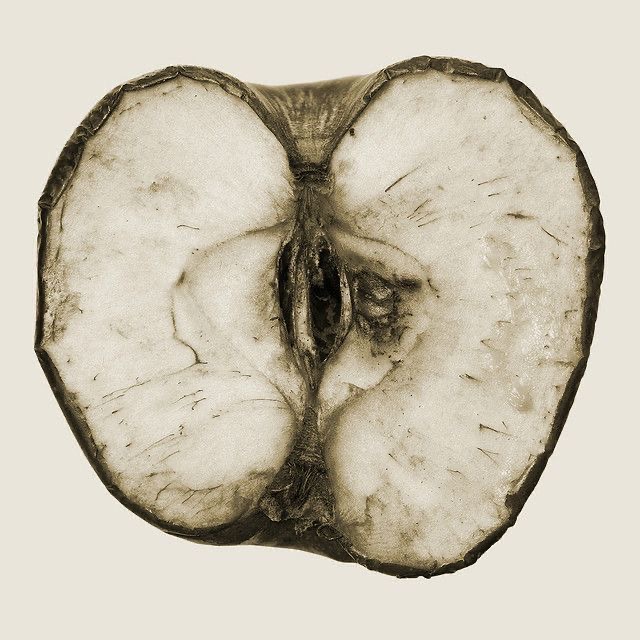
Okay, let’s start with a high-frequency – often heard – lexeme. Vagina. Etymologically derived from the 17th century Latin word ‘sheath’. For those of us who don’t know, a sheath is a protective covering for a sword. Already, we’ve got a pretty strong case for sexual language being based on men, at least one word. So, this is an inherently masculine root, it stems from the idea of women being nurturers, existing for the ease of men. It should be noted too, that a sheath has no other purpose than the protection of its said sword. Perhaps this has no relevance, considering the 17th century was also a time when the idea that women only existed for procreation thrived, but maybe that’s an extension of this notion. Just thinking aloud. If women, during this period, were seen to bear children unto their husbands, why wouldn’t this metaphor have some level of abstract continuity?
Then again we can always argue it was a description of practicality, the same motion in both sex and drawing and putting away a sword. It is natural to draw on parallels, but if the vagina came first (I am not fact-checking this, I’m quite certain) why did we not name a sheath, a vagina? I don’t have a concrete answer, and I hope you’re not expecting one either.
Also, its semantic evolution arises from an overwhelming lack of knowledge of female biology. Vagina is used in place of the vulva, the entirety of the anatomy is known as the vulva, yet we only refer to it as its meronym, the orifice. The only ‘practical part’, for men at least.
8/10 on the sexism scale from me.
Let’s take a different approach. I had this conversation with a French friend not long ago, and I think it holds prevalence in this context.
Grammatical gender is a characterising aspect of the French language, the masculine and feminine being imposed before a noun. Now, a common misconception of the language is that grammatical gender is conflated with cultural or sociological gender. This is not true, grammatical gender is usually a suffix-based allocation. Endings such as ‘elle’ or ‘ette’ are pretty concretely feminine, and as a rule ‘e’ as an ending is feminine too. ‘Le vagin’ is masculine. There has been discourse as to why The Académie française could not (or would not) change the grammatical gender to align with a more progressive stance to ‘la vagine’, as it is the most inherently feminine ‘thing’ in existence. It is an easily implemented change that would not interrupt the rest of the language, and there are always exceptions. Would anyone even use it at this point though? It is embedded in the language. Is it a redundant cause when it has no immediately sexist undertones?
Rating this 2.5/10 on the sexism scale. (.5 for the etymology. Yes, I am very unimpressed by it).
Okay. Take a breath before this next word, please. Cunt. Yep. Its origins are unknown, we have multiple origins where we believe it could come from. We know that there is relation to Dutch and Germanic, ‘kunte’. There are proposed impressions of it coming from the Latin ‘cunnus’ which later transpired to cunnilingus, as well as having metaphoric connotations ‘a little house’ (presumably in preference to the womb), due to many languages having this semantic representation of sexual organs. Anyway, we do not know so all we can do is hypothesise the degree of sexism, if any. In the modern day, it has pejorated, a euphemistic and derogatory word to insult a person. We know that a lot of insults and swear words are phallic in nature, though somehow it seems to be the female-derived ones that are the most foul. Subject to opinion though, maybe. While it’s undeniably a societally stigmatised, even demonised, term for anatomy, it has one thing in common with all these other profanities. Plosives. This alveolar [t] realisation creates the sensation of abruptness, a harsh ending. Is this why it is such a harsh word? The majority of expletives will have checked endings, a quick production value. ‘Dic[k]’, ‘shi[t]’, ‘bit[ch]’. Cunt replicates this quality, is that why it has the connotations we hold today, instead of it being to spite women?
I rate this 6/10 on the sexism scale. I think that phonology has some logic to it, but the way the world has pejorated and devolved from its original meaning is something that has not happened in the same way, to the same extent as any male-based profanities have.
Sophia Smith Galer from the BBC wrote an extremely profound article on a similar topic. She points out that Indo-European languages, among others, often subsume cultural expectations of women directly into their lexis, particularly when associated with marriage. ‘Kanya’ in Hindi is used interchangeably to mean girl or virgin ready to be wed. Not sure I need to expand on the bigotry of the aforementioned but I will. The emphasis on a woman’s body, her readiness for marriage by purities’ standards is, not to be conspicuous in my opinion, quite terrifying. When you contrast this with the word “doolha’, groom. That is all it means. While it holds weight concerning the expectation of marriage, evidently, it does not have the same focus on societal expectations, virginity or status. This type of lascivious language geared towards women reaffirms the objectification we know to exist and controls the perception of what it means to be feminine. The contribution this language has to misogyny in a non-Western society is massively telling of the impact of British colonialism and therefore our responsibility to the views held and the ties to our language. We must remember the nuances of sexism in other places and how we uphold them. The recollection of British impact is imperative to the upholding of this system.
10/10 on the sexism scale.
I wonder, as I’m writing this, if it is that language is rooted in misogyny, or rather, that misogyny is rooted in language. Do we use the words in the way we use them because of our sexism, or are these words actually inherently sexist? Is it that our societal structure allows us to find more ways to implement subtle sexism into our language, rather than our language that is promoting sexist ideologies? Somehow, I am left with more questions. I suppose this is not to show you that misogyny exists in language, that is repetitive and not particularly profound. But perhaps to show you that language is absorbent, and while we might forget, our language never will. It is reflective of us and our values as a collective throughout time. I do not have the answers to my questions and maybe I am not supposed to. Even if I am wrong, and sexual language is not innately sexist, there is substance in even entertaining the thought, if it were not possible, if sexism was not as entrenched as it is in society, I do not believe it is something I would’ve deemed possible. That, to me, affirms that language is a mirror, the way we see the world based on our experiences. Is sexual language androcentric? Potentially, but I thought so and maybe that means I need to evaluate my experiences and see why it was an aspect of language I was so drawn to. Does that make sense? If this is a load of nonsense to you, whoops, and if you are confused, I am too, it is a complex thing to make sense of.
Leave a Reply