Code switching is a phenomenon mostly seen in bilingual and multilingual environments and acts as a bridge between different languages. It’s when people switch between languages mid-conversation, often to fill in the blanks when a word just won’t come to mind in that language, that one word you so desperately wanted to use. The word that ran away from you.
Without me even realising it, code switching had taken centre-stage in my life. Code switching has become a gateway to my roots. While I have yet to master my mother tongue, it has brought me much closer to reaching that goal, one step at a time.
This is my story about attempting to master the art of code switching. It’s a story that has never been told in its complete form. On the occasion that I’m asked where my family comes from, or where my origins lie, I would reveal pieces and fragments of a skill that I rarely appreciated until recently. Perhaps I could understand that whenever English and my inherited language collided, there was a shift. I just couldn’t find the right words. Until now.
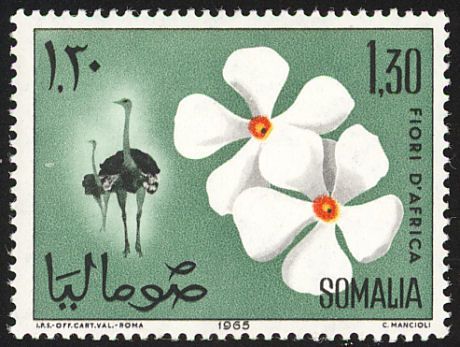
Both my parents hail from Borama, a city in northwestern Somalia. The East African country is mostly known for its ongoing civil war and terrorism. I was often embarrassed to reveal where I come from due to its negative depiction in the media. When I wasn’t asked about the pending war, or whether I’ve ever visited the motherland, the conversation would often turn to whether I eat bananas with rice (to confirm, no I do not). The truth is that most–if not all–nations have a dark past. We shouldn’t ever feel ashamed to hail from a certain place. For me, my mother’s dishes acted as love letters, reminders of home when I felt like an outsider. Now my favourite thing to drink when I’m sad is a cup of shaa. The warm spices of cinnamon, cardamom, and cloves reminds me of the rich culture Somalia has to offer. You just have to look beyond what the news outlets present to the general public.
I grew up with a confused sense of self in the cultural melting pot that is London. My parents made it very clear that I am Somali, and that I should be proud to be so. But I didn’t feel pride or confidence. I remember hesitating to call out Aabo when my father came to pick me up from school, and on the rare occasion my classmates asked how a certain word was said in my home language, my mind would suddenly go blank. Eventually, I began to believe that I just shouldn’t bother, and I simply would never be able to articulate in my mother tongue. English became all that I cared about, and I focused on sounding like a local Londoner, and presenting myself as one. The city life is all that I’ve ever known and I tuned into that. With wanting to fit in I rejected my heritage, my history and my linguistic roots.
In my household, English has always dominated. With the sole exception of my mother, we all converse in the language. As a child, this didn’t bother me because my only concern was being able to at least somewhat express myself. When I couldn’t get through to my mum, who refused to accept my poorly formulated Somali, I turned to drawing. And when she grew tired of my drawings, I turned to writing in the hopes that one day, someone would understand me. My father, funnily encouraged conversing with me in English, only switching tongues at my mother’s exasperated attempts to get her children to speak their ‘true’ language. Looking back, I regret not trying harder to embrace my roots, both the good and bad.
One phrase that became embroidered into my vocabulary were the words ‘I’m sorry’ or ‘Raali ho’. Raali ho was a way to apologise for my many shortcomings: I’m sorry I don’t speak Somali very well. I’m sorry I don’t know much about the country’s political situation. I’m sorry that my parents didn’t do a ‘good enough’ job to teach me about my heritage. At the slightest display of disappointment, whether that be from my relatives, family friends or even my own parents, I would bow my head and utter those words. It was an attempted peace offering to acknowledge that yes, my Somali is bad. And yes, I may never be considered as a true Somali, whatever that even means.
I realise now that I should’ve never been made to feel that way, to bear the burden of not being a native speaker of a language that was rarely spoken in my home. I was only a child, yet I was made to feel guilty for my very existence. And if it wasn’t entirely my fault, strangers who didn’t even know me would comment on my parents’ poor efforts, and I would become enraged. So, I finally decided to do something about it. Code switching became my own middle ground, and I stood firm on it. If I couldn’t find the right word to use when conversing with relatives, I would slip in an English filler. Instead of laughing off comments about my bad pronunciation, I would ask how to say it correctly instead. It soon became a quiet form of rebellion, and before I knew it I could have whole conversations in my language, even with people from different regions, each with their own take on Somali lexicon.
To accept who you are, and where you come from can be incredibly freeing. I accept that my Somali is not perfect, but compared to just a few years ago I have come a long way. This was only possible once I accepted that the pursuit of perfection only ever weighed me down. I also accepted that English will always have a large influence in my life; it’s the language where I feel most like myself. The art of code-switching is often overlooked, yet for me, it has been a bridge between worlds, a quiet rebellion, and a way of reclaiming my identity. And that’s something I’ll carry with me for years to come.
Leave a Reply