
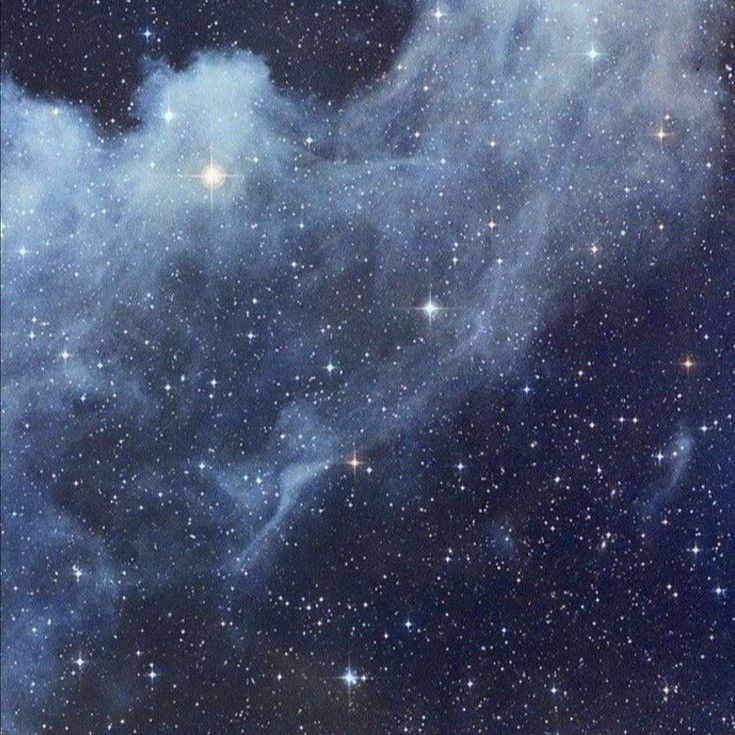
| A Night Counting Stars | 별 헤는 밤 |
| Yoon DongJu | 윤동주 |
Translated by Chaewon Kim
| As the heavens hold the seasons They are now full of autumn. | 계절이 지나가는 하늘에는 가을로 가득 차 있습니다. |
| Without any worries I can almost grasp all the autumn stars. | 나는 아무 걱정도 없이 가을 속의 별들을 다 헤일 듯합니다. |
| However— All the stars—one by one—engraved in my heart cannot be fully fathomed As the morning comes, As tomorrow night awaits, And as my youth continues. | 가슴속에 하나둘 새겨지는 별을 이제 다 못 헤는 것은 쉬이 아침이 오는 까닭이요, 내일 밤이 남은 까닭이요, 아직 나의 청춘이 다하지 않은 까닭입니다. |
| A star for reminiscence A star for love A star for loneliness A star for admiration A star for poetry A star for my mother— mother, | 별 하나에 추억과 별 하나에 사랑과 별 하나에 쓸쓸함과 별 하나에 동경과 별 하나에 시와 별 하나에 어머니, 어머니, |
| Dear mother, I deliver beautiful names for each star. The names of old classmates at school, the names, Pae, Kyung, Ok, of foreign ladies, the names of the girls, already mothers of their children, the names of the poor neighbours, pigeons, dogs, rabbits, mules, deer, the names of the poets, Francis Jammes, and Rainer Maria Rilke. | 어머님, 나는 별 하나에 아름다운 말 한마디씩 불러 봅니다. 소학교 때 책상을 같이 했던 아이들의 이름과, 패, 경, 옥, 이런 이국 소녀들의 이름과, 벌써 아기 어머니 된 계집애들의 이름과, 가난한 이웃 사람들의 이름과, 비둘기, 강아지, 토끼, 노새, 노루, ‘프랑시스 잠’, ‘라이너 마리아 릴케’ 이런 시인의 이름을 불러 봅니다. |
| All of them are far beyond the tip of my fingers. As distant as the stars. | 이네들은 너무나 멀리 있습니다. 별이 아스라이 멀듯이. |
| Mother, And you are far away in North Gando. | 어머님, 그리고 당신은 멀리 북간도에 계십니다. |
| Longing for something I scribble my name — down on this hill blessed by the starlights and buried it in the soil. | 나는 무엇인지 그리워 이 많은 별빛이 내린 언덕 위에 내 이름자를 써 보고 흙으로 덮어 버리었습니다. |
| Insects cry throughout the darkness mourning their shameful names. | 딴은 밤을 새워 우는 벌레는 부끄러운 이름을 슬퍼하는 까닭입니다. |
| Yet, when winter leaves and spring arrives upon my star As fresh greenery blooms on a tomb May there be proud luscious grass on the mound of my name. | 그러나 겨울이 지나고 나의 별에도 봄이 오면 무덤 위에 파란 잔디가 피어나듯이 내 이름자 묻힌 언덕 위에도 자랑처럼 풀이 무성할 거외다. |
Yoon DongJu (1917-1945), the young and ill-fated poet, forever questioned his identity as a citizen of the lost country until his very last breath. Yoon Dongju was born during the occupation of Imperial Japan and passed away a few months before the independence in 1945.
Born in a region north of the Korean peninsula staying away from the authorities, Yoon Dongju moved and graduated from secondary school and university in Seoul, Korea. Afterwards, he travelled to Kyoto, Japan to continue his studies. While being “fortunate” enough to continue studying in Japan, he struggled with figuring out his true identity. Most Koreans were forced to change their names to Japanese characters, and Yoon Dongju was one of them. He was constantly aware of his desire to actively participate in the independence movement, but due to various reasons, he was unable to do so. This left him feeling isolated and helpless in a foreign country. Poetry was the way he chose to cope with these feelings.
The concept of searching for one’s name is often shown in his poems, which shows his self-reflection and criticism (of some sort) against his “shameful act” of not being able to actively resist the authorities of Imperial Japan. In A Night Counting Stars, nature is used to express the complicated emotions, as well as the shame associated with one’s name. The stars symbolise individual identities, and the night sky reflects the challenging period of Japanese colonial rule. The poem starts with the narrator trying to count the stars in the autumn sky and naming them one by one—starting from calling out to his mother, far away in his hometown, moving on to proper names like Pae, Kyung, Ok, the French and Austrian poets, and ending it with common names such as pigeons, dogs, mules, and deer. The long, breathlessly continued stanza gives each living being a life, uniqueness, and independence.
Finally, the poem concludes with the narrator waiting for spring; however, in this future vision, the narrator himself is absent. Instead, a tomb bearing his name is present, implying an ending of some sort. This may signify the end of his own life or the end of his shameful name. This remains open to individual interpretation; however, considering that his life didn’t last long after the creation of this poem, it appears to foreshadow the sorrowful fate of the “unfortunate” poet.
Translating a work that I’ve read thousands of times wasn’t very easy. I spent a lot of time carefully considering each word and phrase, and not all lines were translated in the same manner. I could come up with some lines effortlessly, while others required more effort to make sure they flowed smoothly and rhymed. For instance, I spent an entire day deciding whether the title should be A Night Counting Stars or Counting Stars at Night. After much contemplation, I chose to place “night” at the very front since it is the head noun in the Korean title. Both “counting stars” and “night” carry equal syntactic weight, so I opted to post-modify the noun with the clause “counting stars”.
Contrastingly, though quite complicated, I had a clear vision for the last stanza: “As fresh greenery blooms on a tomb; May there be proud luscious grass on the mound of my name.” Unlike most English poems, this poem doesn’t rely heavily on rhyme, but it incorporates mild prosodic rhythms and uses repetition to create consistency. I aimed to maintain these characteristics without overly elongating the lines with excessive descriptions, while also focusing on rhythms and introducing some rhyme in certain stanzas. Hopefully, I achieved this balance.
To add a personal note on this, Yoon Dongju’s poems have always had a special place in my heart. Whenever I was lost in my life, his poems were a company of the lonesome journey of finding myself. Witnessing the political struggles in South Korea in December 2024, I too have felt helpless in a remote city where no one seemed to care about what was going on in my homeland. After years of reading his poems, I felt I finally understood what sort of self-forgiveness and consolation he sought for himself by writing these poems.
Life is filled with doubts, questions, and a search for answers that often feel out of reach. Yet, we discover answers through the beauty of words. This is why I love languages; one of the most beautiful creations of mankind. I find solace and joy in sharing the remarkable aspects of Korean culture and especially literature, making them more accessible to the global community. Being able to bridge the gap between the two languages feels like a small superhero power that I’ve been gifted with.
(Many thanks to all who helped me with some translations :-))

Leave a Reply