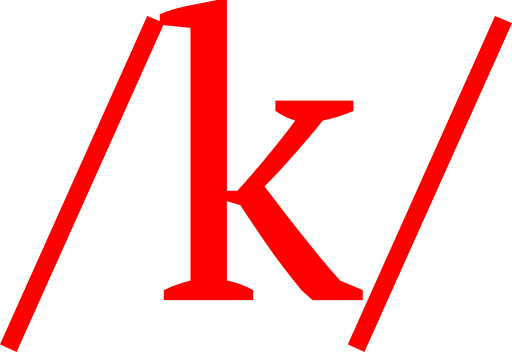

Graphemes. They are symbols that represent sounds in writing. That is their only job, and yet somehow – at least in English – it is a task that they don’t do particularly well. To illustrate this, I’ve included an excerpt from a poem published in 1920, since which there has been no improvement (much to the dismay of English foreign language students around the globe).
Gerard Nolst Trenite – The Chaos
Dearest creature in creation
Studying English pronunciation,
I will teach you in my verse
Sounds like corpse, corps, horse and worse.
I will keep you, Susy, busy,
Make your head with heat grow dizzy;
Tear in eye, your dress you’ll tear;
Queer, fair seer, hear my prayer.
Pray, console your loving poet,
Make my coat look new, dear, sew it!
Just compare heart, hear and heard,
Dies and diet, lord and word.
Sword and sward, retain and Britain
(Mind the latter how it’s written).
Made has not the sound of bade,
Say-said, pay-paid, laid but plaid.
There are two main schools of thought regarding grapheme classification; analogical and referential conception. The former of these refers to the idea that each individual letter is a grapheme (such as the “h” in shake), whereas the latter refers to the idea that a grapheme is the smallest unit that refers to a sound (so the grapheme is instead “sh”). There has been extensive debate over which interpretation is more viable, and this is the kind of squabbling that has prevented any kind of spelling reform.
In English, phonemic orthography is used. Phonemic meaning the correspondence between graphemes and phonemes (spoken sounds), and orthography simply being a writing system. It is by no means the only language to attempt this through the use of an alphabet, but it is certainly one of the least successful. Plenty of languages manage to maintain high phonemic orthography (otherwise called regular spelling), such as organic languages like Serbo-Croatian with its 30 graphemes for 30 sounds, or constructed ones such as Esperanto – which adheres to the principle “one letter, one sound”.
“Maybe it’s a failure of Western European languages!” I hear you say, holding onto your English pride; “French isn’t highly phonemically orthographic!”, this is a valid point, were it not for the fact that French is still significantly more so than English, with its (more) consistent and predictable rules of pronunciation. The silent letters and elision make the language look more daunting than it is, and the same consistency over English is seen in German, Italian, and Spanish. Even many Eastern European languages do better than English despite shifts from cyrillic to latinization, such as Romanian and Hungarian (don’t tell any Romanians or Hungarians that I’m grouping the two, they do NOT like it).
There are 13 ways in English to write the schwa (using the IPA symbol <ə>), including but not limited to: every vowel letter (take balloon, problem, support, family, other, and analysis if you need a semivowel). Not only is the same sound written in multiple ways, but the same script can refer to multiple sounds, with the letter “T” having multiple realizations: aspirated (“table”), unaspirated (“stop”), glottal stops (the classic British “bottle of water”, or, rather, “bo’o o’ wo’oh”) and flaps (American “butter”). English has anywhere from 14 to 22 vowels based on regional variance, and 26 to 27 consonants, which are encapsulated in a nice, round number of 25 letters in the alphabet, at least in a universe better than ours. We are stuck with 26 letters, only 5 of which are vowels.
This is also seen in a particular vowel named rather enthusiastically as the GOAT vowel, which is typically associated with the General Australian variety (GenAus) but appears in General American (GA) and Received Pronunciation. The glide after vowels in GenAus has turned into a “bunched r” (also referred to as a “bunched r”, “molar r”, “domal r”, and “braced r”) and is transcribed as [ɣ̞ˤʵ], which is a voiced labialized pharyngealized retroflexed velar approximant, which is a mouthful that could easily be expressed and understood with an example: Oh naurrr!
So why the variance and the lack of consistency in English? Who is to blame? And are they still alive so we can get out the pitchforks and torches? Sadly, to the last question, the answer is no. To better understand, a brief history lesson is in order.
After 300 years of Normans ruling England, the official language of the country became English again from around 1350. Early writers, such as Geoffrey Chaucer – writer of The Canterbury Tales, a series of stories that would undoubtedly be considered erotica if written in the modern day – were actually quite consistent in spelling, but then came our first culprit: William Caxton, inventor of the printing press. Though he was English, his English spelling skills were not particularly good due to having lived in Europe for the preceding 30 years. Words were changed to match European languages, such as the introduction of a silent “h” in words like “ghost” and “gherkin”, though in some cases this was later removed, like in “ghossip”, because even in the 16th century it was essential that people get “the tea 💅” as quickly as possible.
A significant number of proposals were published in the 16th and 17th century for major-scale spelling reform, introducing uniformity and regularity to the transcription of the English language. However, just like Icarus flying too close to the sun and having the wax wings of Daedalus to meet his untimely demise in the ocean, these reformers dreamt too big, and their reforms were never implemented. Not all was lost, as smaller proposals such as James Howell’s Grammar recommending the change of words like “logique” to “logic” and “warre” to “war” were incorporated into the language. Around this time was also the Great Vowel Shift, an extremely grandiose name for something with an extremely grandiose cause: distancing ourselves from the French, at least according to one paper I didn’t really read titled: Asya Pereltsvaig (Aug 3, 2010). “Great Vowel Shift — part 3”. Languages of the World, positing that Brits either (poorly) tried to imitate the French or tried to distance themselves from the French due to poor international relations on account of the constant warring and whatnot. Sadly, no major reforms have been brought about since, though not for lack of popularity, with supporters like Charles Dickens, Benjamin Franklin, Theodore Roosevelt, H. G. Wells, Andrew Carnegie, Mark Twain, Isaac Asimov, and Prince Philip, just to name a few.
Is there anything we can do? Especially since English is the only language in the 10 most spoken languages without a regulatory body? It appears not. We will simply have to embrace English as the ugly duckling that it is, a Frankenstein’s monster made of the cadavers of other languages, both dead and alive, but at least it is ours.
Written by Eric Sycamore
Edited by Charlie Hepper
Leave a Reply