
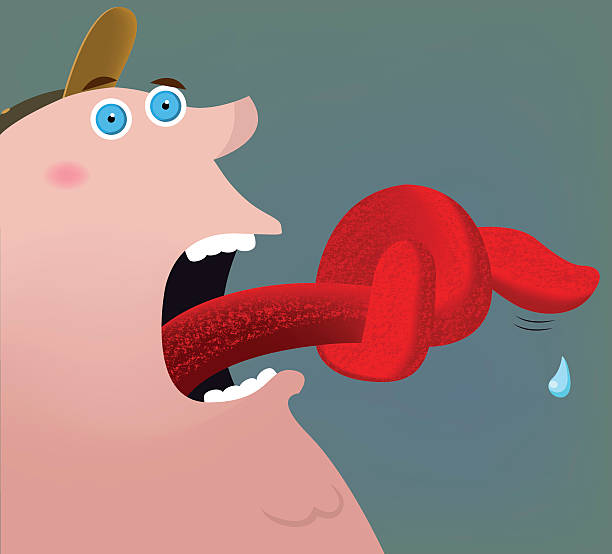
Tongue twisters have left all of us baffled at one point. From the devious repetition of ‘red leather, yellow leather’ to the classic ‘Peter Piper picked a peck of pickled peppers’, I love them while I hate them at the same time. Tongue twisters are a universal fascination that transcends borders and cultures. These phonetic brainteasers transform our everyday spoken language into a linguistic escapade. What I wonder is, can you get through this article without getting your tongue tied?
A Backstory
It is important to understand the primary purpose of tongue twisters. Often, they are used as linguistic exercises, used by actors, public speakers, and language learners alike. Tongue twisters serve as verbal gymnastics, which enhance articulation, pronunciation, and fluency. The rhythmic patterns and repetitive sounds found in tongue twisters provide an engaging platform for individuals to refine their vocal skills, marking it as a valuable tool in the development of oral communication.
‘Peter Piper Picked a Peck of Pickled Peppers.’
Tongue twisters have traditionally been passed down through generations, constantly evolving in form and content as cultural shifts and linguistic changes occurred. ‘Peter Piper with his Pickled Peppers’ is often credited to John Harris, which included it in Harris’ book “Peter Piper’s Practical Principles of Plain and Perfect Pronunciation” in 1813. The alliteration and playful use of the /p/ sound has sedimented Peter Piper as a timeless classic.
‘She Sells Seashells by the Seashore.’
Allegedly inspired by the life of Mary Anning, an English fossil collector, dealer and self-taught paleontologist who made significant contributions to the understanding of prehistoric life. Mary Anning herself sold seashells by the seashore, her favorite place to set up shop was the Jurassic Coast located in the Lyme Regis, England. Anning discovered and sold a vast array of fossils as well as seashells. The seashells she sells by the seashore (mentioned in the twister) could be a playful reference to her dealing of seashells.
‘Fuzzy Wuzzy was a bear. Fuzzy Wuzzy had no hair. Fuzzy Wuzzy wasn’t very fuzzy, was he?’
Unfortunately the fuzziness of this tongue twister does not originate from the tongue twister. It has its origin in a poem titled “Fuzzy-Wuzzy” written by Rudyard Kipling. Published in 1892, the full “Fuzzy-Wuzzy” poem is a narrative, telling the story of the Battle of Omdurman in 1989. The term “Fuzzy-Wuzzy” is used to describe the Beja warriors due to their distinctive hairstyles. The repetition of the “w” adds a rhythmic phase to the phrase that undeniably added to the reason why it became a popular phrase, used independently of Kipling’s poem.
‘How much wood would a woodchuck chuck, if a woodchuck could chuck wood? He would chuck as much wood as a woodchuck would. If a woodchuck could chuck wood.’
Tracing back to a 1988 almanac, the tongue twister gained popularity after its feature in the “Yankee Magazine’s Book of Forgotten Arts” in 1988. I have learnt I have only ever known half of this twister. I feel sorry for my former self. Not that long ago however, just before knowing this. At one point I used to think I was cold saying ‘how much wood would a woodchuck chuck, if a woodchuck could chuck wood’. Now there is an unheard-of segment to learn, and I honestly do not think I can be bothered. I will still pretend to know all of it.
The origin of this twister is attributed to Richard Thomas, a New York State wildlife expert who was responding to a letter from a reader. You may be wondering what was in the letter. I wondered the same thing at some point, but it inquired about the chucking abilities of woodchucks. Richard Thomas was simply attempting to craft a humorous response. No comment on if it is funny. There is no definitive answer to this twister, but it does question the wood-chucking capacities of woodchucks which I respect.
Some honorable mentions of tongue twisters that have little origin knowledge but are fun to try out may include:
- Six slippery snails slowly seaward.
- Irish wristwatch, Siss wristwatch.
- Can you can a can as a canner can can a can?
- A black bug bleeds black blood, and a blue bug bleeds blue blood.
- Shep Schwab shopped at Scott’s Schnapps shop.
- Red leather, yellow leather.
- Betty and Bob brought back blue balloons from the big bazaar.
- How can a clam cram in a clean cream can.
Some dishonorable mentions I found that are less fun to try out may include:
- Unique New York, Unique New York, Unique New York.
- Rubber baby buggy bumpers.
- Toy boat. Toy boat. Toy boat.
- Six thick thistle sticks. Six thick thistles stick.
If your head still does not hurt after reading all of those tongue twisters, you can give it a try of the one which is often considered as the most challenging and treacherous tongue twister ‘The sixth sick sheik’s sixth sheep’s sick’. With its notorious combination of “s” and “sh” sounds and its enhanced use of repetition, ‘The sixth sick sheik’s sixth sheep’s sick’ is not to be messed with.
Leave a Reply