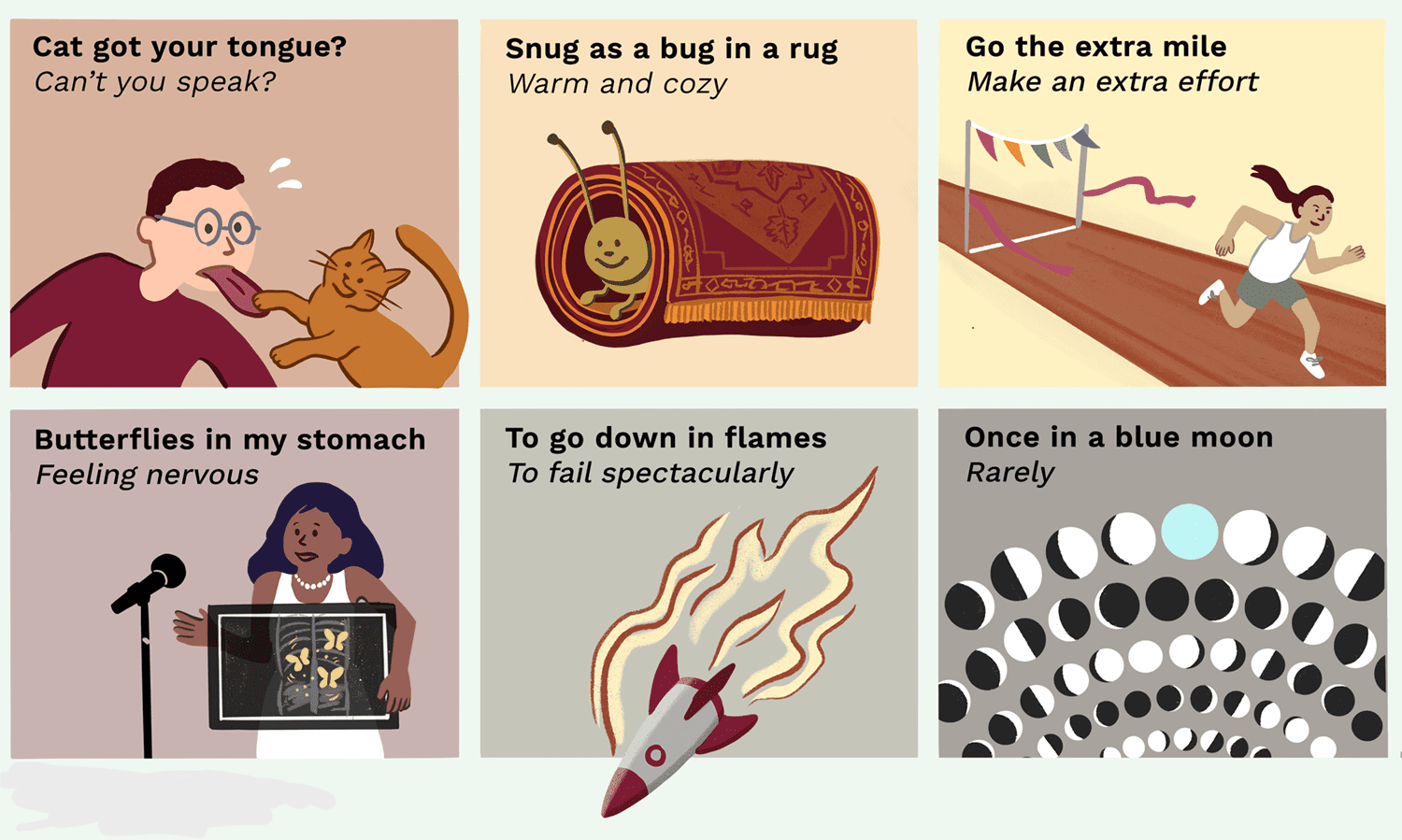
Linguistic features, such as idioms, can offer an insight into language that goes beyond basic communication. They combine history and culture, therefore essential in truly understanding a language- especially if you wish to achieve a native-like efficiency. So let’s embark on a linguistic journey as we unravel the enchanting world of idioms from a variety of cultures.
1) Turkish Treasures
- “Keçileri kaçırmak”
Literal translation = to lose the goats
Meaning = To go mad (‘to go bananas’)
- “Nazar değmesin”
Literal translation = Don’t let the evil eye touch you
Meaning = used for trying to protect someone after praising them (‘knock on wood’)
- “Maydanoz olmak”
Literal translation = to be a parsley
Meaning = to be meddlesome
2) Italian Flourishes
- “Prendere due piccioni con una fava.”
Literal translation = to catch two pigeons with one bean
Meaning = achieving two things with one effort
- “Hai voluto la bicicletta? Adesso pedala!”
Literal translation = You wanted the bicycle? Now peddle it!
Meaning = facing the consequences of your choices
- “Non tutte le ciambelle riescono col buco.”
Literal translation = not all doughnuts come out with a hole
Meaning = things don’t always go as planned
3) Japanese Haikus in Language
- “石の上にも三年” (Ishi no ue ni mo san nen)
Literal translation = three years on a rock
Meaning = patience and preservation lead to success
- “猫の手も借りたい” (Neko no te mo karitai)
Literal translation = wanting to borrow even a cat’s paw
Meaning = desperately seeking help, no matter how small
- “十人十色” (Jūnin toiro)
Literal translation = ten people, ten colours
Meaning = each person has their own opinions
4) Russian Enigmas
- “Брать быка за рога.” (Brat’ byka za roga)
Literal translation = to take the bull by the horns
Meaning = facing a problem head-on (with determination)
- “Лезть в свои сани.” (Lezt’ v svoi sani)
Literal translation = to get into one’s own sleigh
Meaning = to stick to one’s own business
- “На воре и шапка горит.” (Na vore i shapka gorit)
Literal translation = the thief has a burning hat
Meaning = a guilty conscience betrays itself
5) Spanish Elegance
- Más vale tarde que nunca.”
Literal translation = Better late than never.
Meaning = It’s better to do something late than not at all.
- “Estar en las nubes.”
Literal translation = To be in the clouds.
Meaning = Daydreaming or not paying attention.
- “Más vale maña que fuerza.”
Literal translation = Skill is better than strength.
Meaning = Emphasizes the value of intelligence and strategy.
6) Chinese Wisdom
- “塞翁失马,焉知非福” (Sài Wēng Shī Mǎ, Yān Zhī FēiFú)
Literal translation = Old Sai loses his horse, how do you know it’s not good luck?
Meaning = Misfortune may turn out to be a blessing.
- “狐假虎威” (Hú Jiǎ Hǔ Wēi)
Literal translation = The fox borrows the tiger’s fierceness.
Meaning = Someone acting with borrowed authority.
- “班门弄斧” (Bān Mén Nòng Fǔ)
Literal translation = Showing off one’s skills in front of a master carpenter.
Meaning = Displaying one’s abilities in front of an expert.
7) Swahili Rhythms
- “Akufukuzaye hakuendi zake.”
Literal translation = He who chases you does not go away.
Meaning = Problems or challenges tend to persist.
- “Maji yakimwagika hayazoleki.”
Literal translation = Spilt water cannot be scooped up.
Meaning = Once a mistake is made, it cannot be undone.
- “Mjinga akiona cha mwenzake hulia cha kwake.”
Literal translation = A fool cries louder seeing someone else’s misfortune.
Meaning = People who make mistakes are quick to point out the mistakes of others.
Language acts as a vessel of culture. It reflects the collective wisdom and unique perspectives of each society. These idioms reveal the shared human experience and the beauty of expression through language.
Leave a Reply