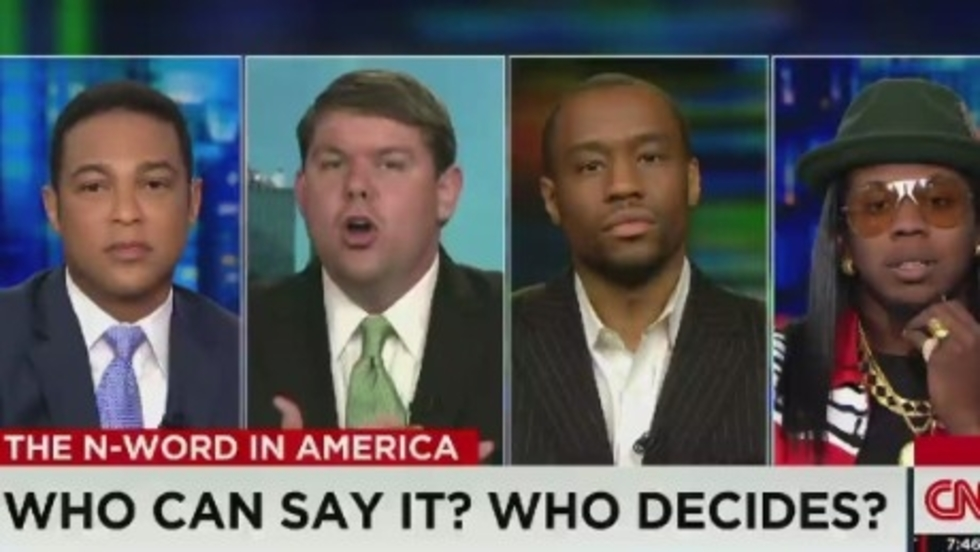
Photo credit: cnn.com
– by Jhelisa Graham
There is no dispute that the ‘N’ word has become a widespread expression, often realised as a term of endearment within and amongst the black community. It is not necessary to discuss who should and should not be able to use the word (but if you find yourself unsure I am sure that Twitter will explain). What is important is to understand how fundamental orthography has been in contributing to the frequency and acceptance of the ‘N’ word in the black community.
Language, like everything else in the world, is an ever-changing phenomenon. Words are constantly being added, removed and altered to fit current times by adopting new meanings through connotations and senses – in Linguistics this is known as semantic change. In Western societies a lot of semantic change is down to the constant influx of new trends such as music, television series, books and cultural emergences. Apart from semantic change, orthography is that part of Linguistics concerned with the conventions of how to write, including spelling, emphasis and punctuation. So how do these linguistic terms become relevant to the N word? It is generally agreed that there is a difference between the spelling ‘n••ger’ and ‘n••ga’ due to a significant social change presented to the world particularly through music.
An unspoken rule is that when the ending -er is applied, the word is being used in its derogatory racial slurred form, whereas, when the -a ending is applied, the word is being used in its anti-oppressive, ‘positive’ form. But how much can the substitution of the word ending really impact on semantic change? Well, according to late rapper Tupac Shakur there is a very clear semantic difference: ‘ni

ggers’ are the ones hanging by rope from the trees and ‘n•••as’ are the ones with gold ropes hanging out in the clubs. Shakur went a step further, using the word N••ga in his raps as an acronym meaning Never Ignorant Getting Goals Accomplished. This distinction -maybe not word for word- has stayed prevalent and well-known in its use in HipHop and Rap, with artists -both male and female- using the word to refer to themselves as well as the people around them. Lastly, concerning the N word’s semantic change, it is possible to go as far as to say that nowadays the use of the word with the –a ending is empowering and uplifting for black people by attaching wealth and success as connotations. A modern and prime example is notable in the song My Ni••a by YG.
To conclude, I want you to ask yourselves, had there not been an orthographic change, would the N word still be used as freely and confidently in the black community?
Leave a Reply